
.svg)
%20(1).svg)
%20(1).svg)
.svg)
.svg)
.svg)
.svg)




.jpg)
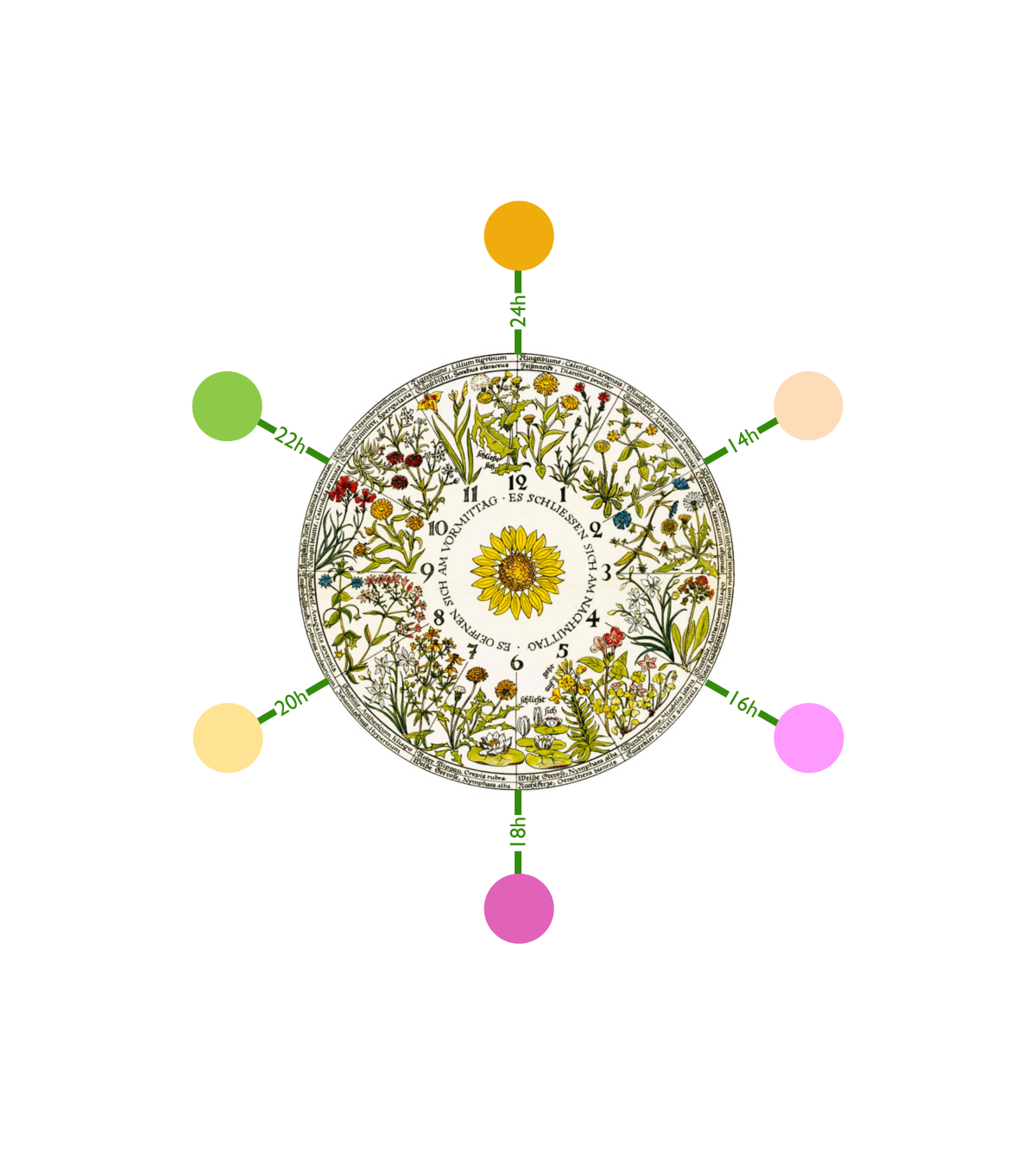
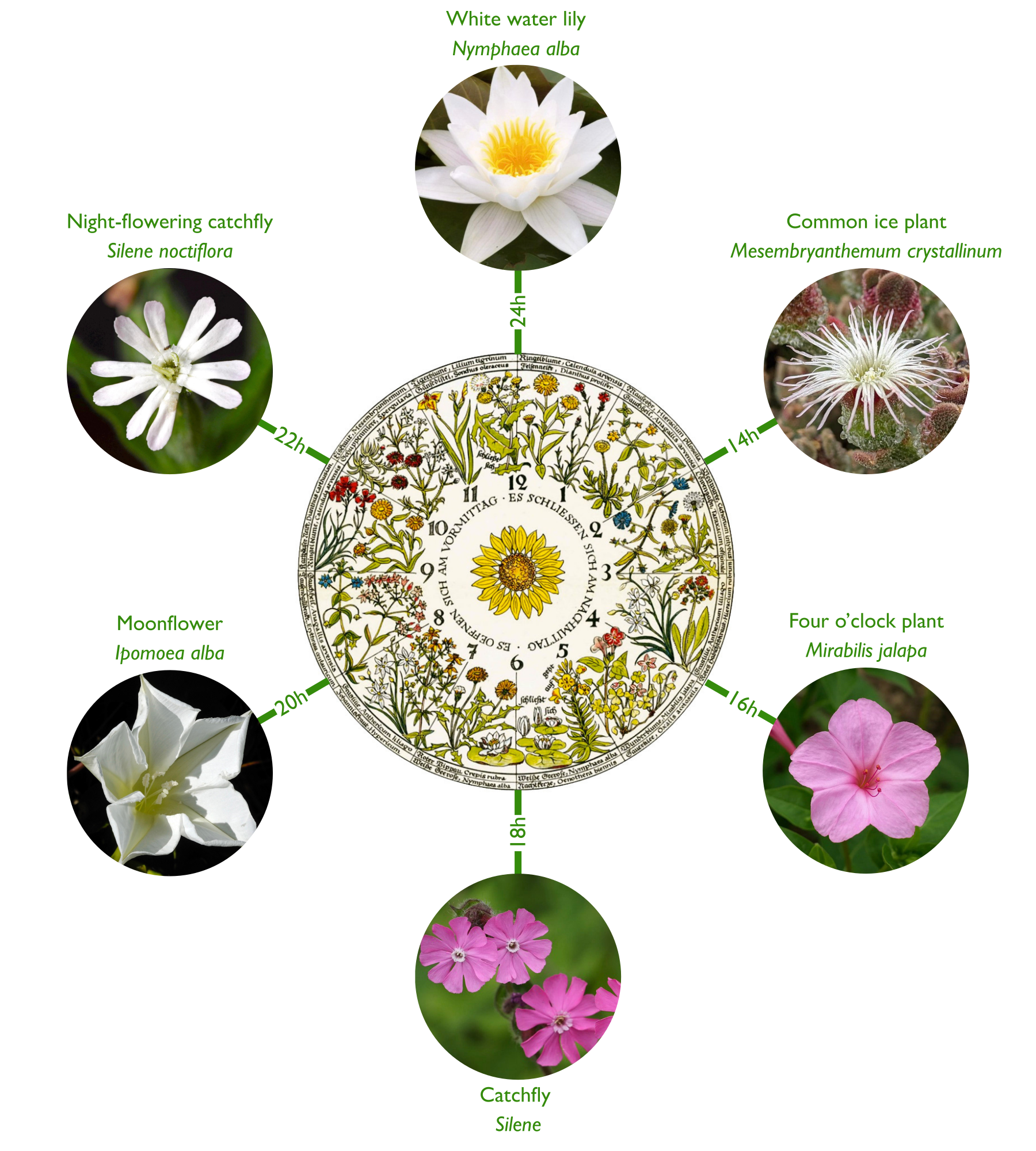
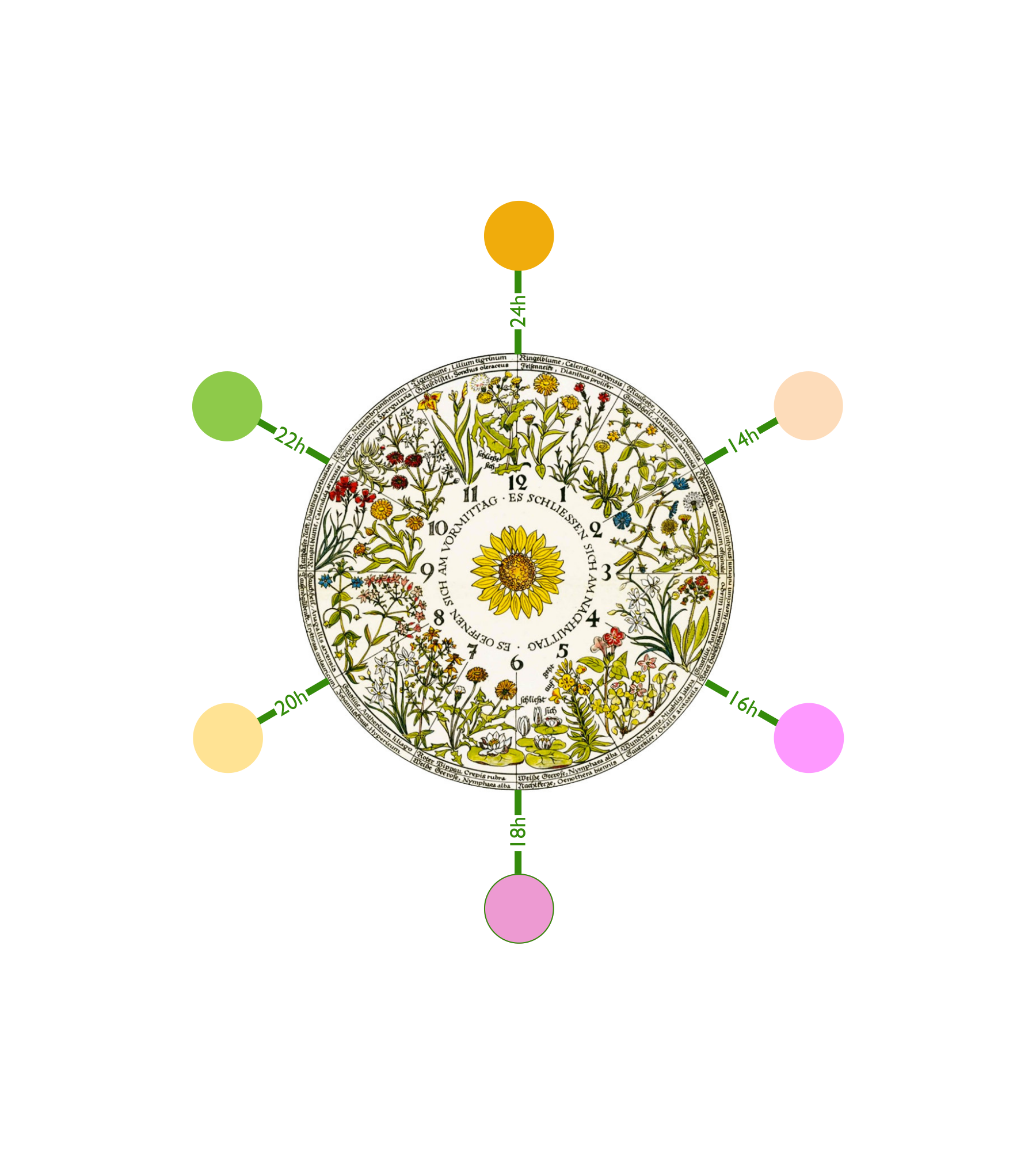
In 1750, botanist Carl Linnaeus imagined a flower clock that linked the opening and closing of flowers to civil time. But short and long term variations in seasonal climate coupled with the temporal dictates of the flower’s internal circadian clock made flower clock time stubbornly incompatible with mechanical civil time.
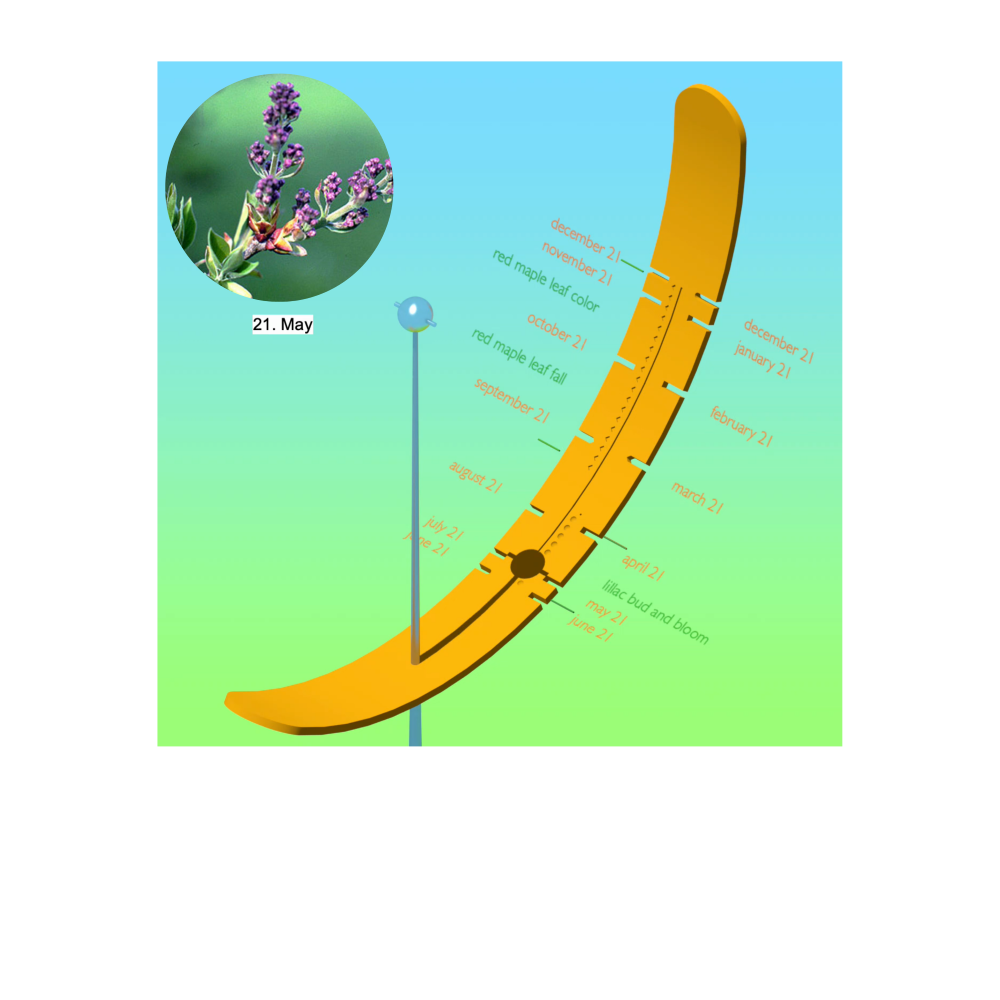
Helioscape offers four Heliotrope sundials that update Linnaeus’ unreliable flowers with four high-precision sundials. First, we expanded the timeframe from daily activity to perennial seasonal change. Second, we encoded plant time on the dial plate using empirically sourced long-term phenological data from the USA National Phenology Network (USA-NPN). Third, we designed the Heliotropes as astronomical-grade solar timekeepers. Fourth, for accuracy, we fabricated them in a computer controlled five-axis milling machine with a precision tolerance of 1/10000”.
The Hathajori sundial, designed for Boston, features civil time notches marking the 21st of each month. Diamonds indicate when the red maple’s autumn leaves change color and fall, while circles mark the spring lilacs’ budding, flowering, and wilting. Using maple and lilac USA-NPN phenological data for Boston, these markers are precisely incised on the dial plate. Explore the Hathajori animation for details.
Year-to-year time tracking of the synchronization–or not–between the incised lilac circles or red maple diamonds and their annually observed bloom and foliage can serve as a measure of climate drift. At one level, this is simple empirical botanical timekeeping. At a deeper level, Heliotropes draw you closer, like a bee to an open flower, and invite you to observe plants on their own terms and in their own time.